Brampton Cleaning Specialists
Your facility requires regular sanitation protocols customized for unique hazards, processing volumes, food allergens, and regulatory visits, with auditable records confirming HACCP requirements, compliance audits, and health department standards. The details below give guidance on sanitation program requirements.
Main Points
- Brampton food safety cleaning experts service restaurants, grocery departments, commissaries, warehouses, bakeries, schools, mobile vendors, and allergen-sensitive operations.
- Cross-contamination avoidance is ensured by treating frequently contacted areas, food-contact equipment, kitchens, floors, drains, restrooms, and storage areas with compartmentalized approaches.
- Approved sanitizer dilution, alignment, and exposure duration are confirmed by certified specialists, with completion documented via samples, assessments, and action records.
- Proper hygiene timelines factor in risk, production rate, transitions, incidents, and regulations when allocating everyday, regular, and annual duties by zone.
- Focus on contractors displaying hazard analysis knowledge, public-health knowledge, safety training education, insurance, credentials, colour-coded implements, and compliance-ready hygiene records.
What Brampton Facilities Require Food Safety Cleaning?
Food safety cleaning is required for any Brampton facility that processes, stores, prepares, packages, or serves food. Apply it to your operation if it falls within public health review, food regulations, or HACCP protocols. This includes restaurants, cafeterias, commissaries, grocery food departments, butcher shops, seafood counters, convenience stores, and institutional kitchens.
You also need documented food sanitation in distribution centers, food processing plants, freezer facilities, commercial bakeries, educational nutrition programs, event spaces, and catering hubs. Mobile and temporary operations count too, including mobile kitchens, festival sellers, and temporary food stands. If your staff handle ingredients, section prepared foods, heat finished items, or keep allergens stored, your facility needs established sanitation documentation. In Brampton, hygiene isn't optional; it's part of statutory, business, and public health compliance.
What Services Do Brampton Cleaning Experts Provide?
You need professional cleaners who sanitize high-touch surfaces, kitchen areas, floors, and restrooms to meet food safety and public health standards. They target these areas because they pose the greatest danger for cross-contamination, slip hazards, and hygiene violations.
If you grasp what they sanitize, you'll successfully ensure your operation satisfies required operational and regulatory standards.
High-Touch Surface Cleaning
organize sanitization frequency according to foot traffic, environmental hazards, and business activities.
Maintaining a directional cleaning method, swapping cleaning materials, and dividing cleaning supplies by location ensures that plan stays verifiable, defensible, and compliance-ready always
Kitchens, Floors, and Restrooms
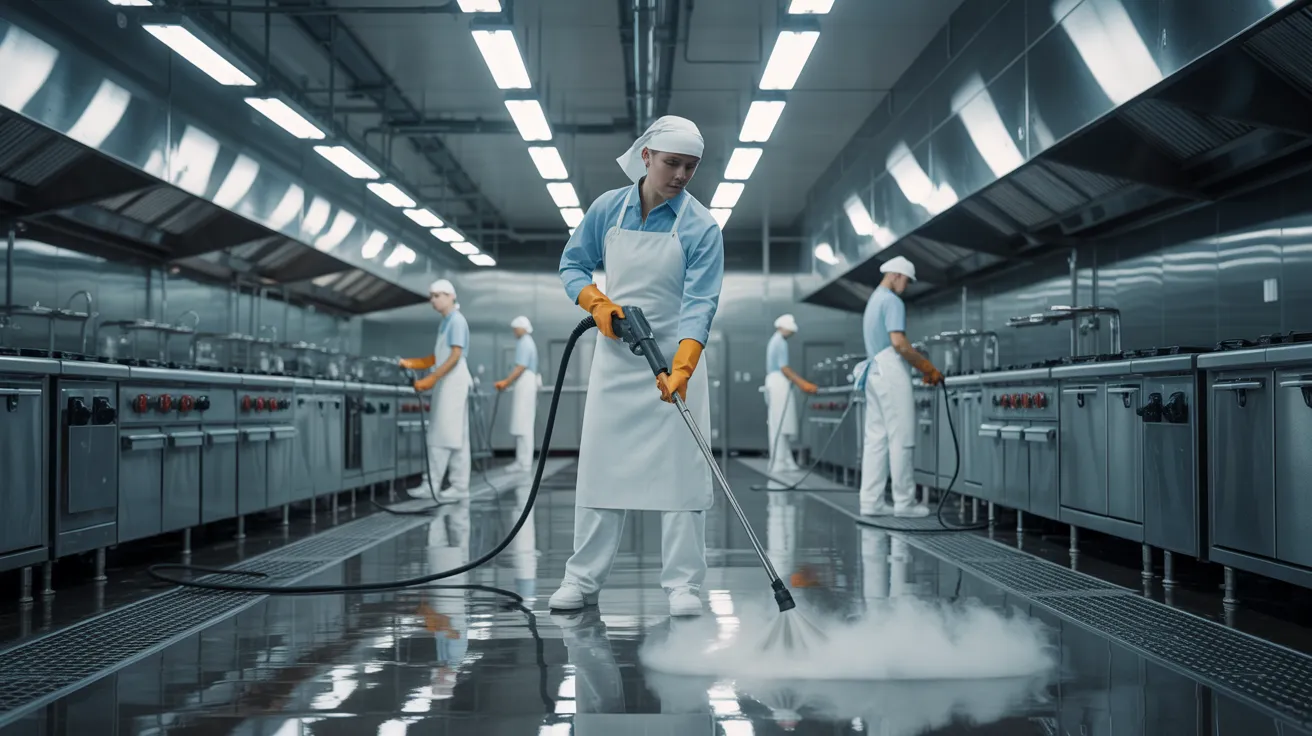
Brampton cleaning services zero in on kitchens, floors, and restrooms as each zone presents different sanitation, slip-and-fall, and wellness concerns. In industrial kitchens, you need grease removal from cooking stations, appliance surfaces, drain systems, preparation areas, and backsplashes to reduce bacterial growth and pest activity.
You should also expect documented flooring maintenance. is also provided as part of the service.
In restrooms, cleaners treat touchpoints, fixtures, partitions, dispensers, and waste containers then restock supplies and control odours. They also maintain restaurant cleaning supply rooms where product storage, sink cleanliness, and drain systems impact daily sanitation standards and worker protection.
Food Safety Cleaning Significance for Brampton Businesses
Brampton businesses need to implement food-safe cleaning standards for satisfying health code requirements and passing inspections. You also reduce bacterial spread through proper cleaning of food-preparation surfaces, appliances, and frequently-touched items. Most importantly, you help protect community wellness by reducing the chance of food poisoning in your establishment.
Regulatory Code Requirements
Brampton food operations must comply with mandatory safety protocols, so sanitation practices is key to satisfying health codes, safeguarding customers, and preventing penalties. You must maintain clean food preparation areas, written maintenance records, safe chemical management, and documented employee protocols that meet municipal and provincial inspection expectations.
When cleaning standards weaken, notices, remedial directives, reputation damage, and service interruption from follow-up inspections or enforcement actions become threats.
Contamination Management
Maintaining health code standards copyrights on your capacity to prevent cross-contamination during everyday food preparation and sanitation. You must separate raw ingredients from ready-to-eat foods, sterilize work zones between assignments, and position cleaning agents away from food surfaces. Explicit protocols lower contamination threats and support consistent compliance during inspections.
Implementing allergen segregation helps keep priority allergens from contacting communal work zones, bins, or devices. Utilize separate boards, color-labeled items, and strict utensil labeling so workers don't combine products during preparation or service. Enforce hand hygiene following fresh proteins, aquatic items, egg products, or allergen materials. Refresh cleaning cloths often, and validate disinfectant levels using test strips. When you train staff to follow these controls every shift, you create a cleaner, safer operation that satisfies Brampton's food safety needs daily.
Community Health Protection
If proper sanitation declines, you don't merely face potential inspection issues—you boost the probability of foodborne illness harming customers, staff, and the broader Brampton region. You also weaken your role in safeguarding community wellness, especially in busy food facilities where contamination can spread quickly through surfaces, equipment, and touchpoints.
You need cleaning protocols that eliminate contaminants, disinfect properly, and confirm effectiveness. That means following exposure periods, employing authorized sanitizers, documenting schedules, and educating employees to meet health-unit expectations. These controls support pathogen reduction by lowering microbial loads before they contaminate surfaces or food. In Brampton, rigorous cleaning shields at-risk groups, limits outbreak potential, and helps you demonstrate due diligence. When you maintain proper standards, you don't just meet regulations—you actively reduce risk and promote secure food handling throughout the region.
How Does Cleaning Support Food Safety Compliance?
Establishing strict sanitation practices enhances food safety compliance by lowering contamination exposure, limiting pathogen development, and maintaining your facility's adherence to sanitation requirements under HACCP-based programs and public health regulations. You ensure that product-contact areas stay visibly clean and microbiologically controlled, supporting documented preventive controls and inspection readiness.
Systematic cleaning also strengthens allergen prevention by removing residues that can provoke undeclared allergen exposure. When you match approved sanitation protocols with compliance training, your staff can follow established protocols, apply approved chemicals properly, maintain records thoroughly, and handle deviations before they escalate. Systematic cleaning enables traceability, establishes remedial measures, and exhibits responsibility during audits. Moreover, it supports you safeguard product quality, sustain operational adherence, and decrease the chances of punitive measures, market recalls, complaints, and unnecessary public health risks.
Determining When to Arrange Commercial Cleaning
You'll achieve the best results from cleaning schedules that incorporate risk, production volume, and regulatory requirements rather than a static calendar system alone.
Schedule cleaning prior to and following promotional, catering, or public functions, or gatherings for effective event turnarounds.
Finding Quality Brampton Cleaning Experts: A Guide
Evaluate providers first by sanitation compliance standards rather than cost. You must ensure each provider understands CFIA, public health, and HACCP requirements for your business. Request insurance proof, WHMIS compliance, staff training documentation, and supervision methods. Check technician understanding of cross-contamination risks, chemical handling, and documented sanitation practices.
You should also assess business dependability and accountability. Request references from food facilities in Brampton, then examine response times, corrective-action procedures, and communication standards. Confirm the company supports supplier audits and can present inspection-ready documentation when regulators or third parties request evidence. Check whether equipment is maintained is performed, colour-coded tools are used appropriately, and site-specific hazards are recognized. A qualified provider protects compliance, product integrity, and your brand reputation.
What aspects should a sanitation plan include?
Document a framework that outlines every sanitation activity, guideline, and role before starting production. You should record cleaning schedules, approved products, ratios, contact periods, tools, and validation approaches for each area, surface, and device. Ensure you include pre-operational inspections, corrective actions, and employee training requirements.
Your plan should also address contamination prevention controls, waste handling procedures, pest management measures, and written schedules for rest areas, drains, flooring, and food-contact surfaces. Describe how you'll keep raw and ready-to-eat processes separate, support ingredient tracking, and ensure accurate allergen labeling through validated cleaning between product changes. You should set accountability, keep signed records, and review results against regulatory standards, HACCP controls, and customer requirements. When gaps appear, update procedures immediately and instruct staff.
Frequently Asked Questions
Do sanitation providers operate during nighttime hours at Brampton facilities?
Yes, you can contract sanitation providers to handle overnight shifts in Brampton facilities. You'll arrange nighttime cleaning around operational windows, access requirements, and staffing levels. Providers generally establish nightshift logistics to prevent disruption, copyright compliance, and log completed work. You should verify response times, management, lockout protocols, and waste management before service starts.
Are emergency spill response solutions available from Brampton cleaning experts?
Yes, you can expect many Brampton cleaning experts to offer emergency spill response services. They handle hazard containment, evaluate dangers, isolate affected areas, and begin swift cleanup to reduce exposure and business interruption. You should confirm their response times, training certifications, PPE protocols, and disposal procedures. If your facility must comply with industry standards, choose a provider that documents incidents, follows compliant sanitation standards, and supports audit readiness.
Can eco-friendly disinfectants be utilized safely on surfaces contacting food?
Absolutely, plant-based sanitizers prove to be secure for food-handling equipment when you opt for items marked food-safe and complying with regulations. You must verify contact duration, dilution rates, and rinse requirements prior to application. Natural-based solutions minimize chemical hazards, though you should gather proof of efficacy against target microorganisms. For preserving residue-free areas, adhere to manufacturer directions precisely and confirm your cleaning agent meets food industry regulations.
Do cleaning schedules permit seasonal production changes?
Without question, cleaning plans adjust easily for seasonal production changes. Modify frequencies, labor allocation, disinfectants, and verification steps to match seasonal workflows while maintaining regulatory requirements. Decrease production interruptions by scheduling sanitation amid changeovers, maximum output, and usage patterns. Further modify SSOPs, training, and environmental monitoring to address seasonal hazards, new allergens, or higher contamination levels. Ongoing evaluations preserve the program functional.
Do professional cleaners coach staff members in proper hygiene techniques?
Indeed, commercial cleaning providers typically provide staff training on proper hygiene. Your staff obtains instruction on proper chemical use, exposure durations, cross-contamination prevention, equipment disassembly, and documentation. They generally adhere to instruction with HACCP, GMP, and CFIA or regional health standards criteria. Many also execute compliance inspections to confirm standards, reveal issues, and reinforce corrective actions. This assists you to maintain consistent procedures, pass inspections, and reduce food safety risks each day.
Summary
By collaborating with Brampton food safety and commercial cleaning professionals, you aren't just organizing—you keep your operation inspection-ready and your standards up to code. From production areas to kitchen zones, every clean surface and maintained corner decreases contamination and prevents costly issues. By arranging service at appropriate intervals and following a documented cleaning plan, you data secure your team, customers, and your credibility. In a strictly regulated industry, clean spaces are mandatory—they're key to business compliance.